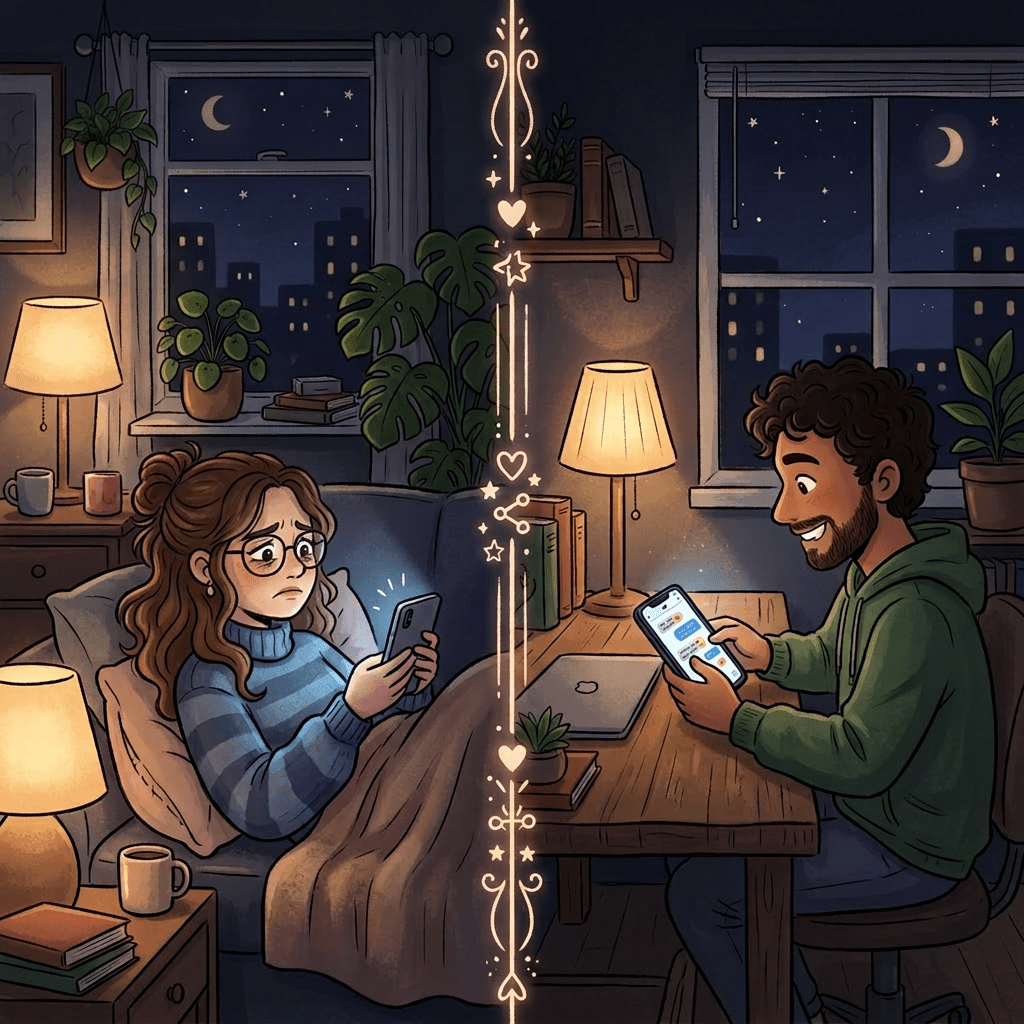
May has been a brutal month for my master’s, and after two months of focusing on my course, we are so back! Alongside my current dissertation research, I’ve been thinking a lot about how modern dating environments interact with attachment, emotional security, and uncertainty.
Introduction
It’s safe to say that dating apps have transformed modern relationships. For many of us, they’ve created new opportunities for connection, made dating more accessible, and allowed individuals to meet partners they may never have encountered otherwise. Yet despite this increased access to connection, many people are feeling more anxious, emotionally exhausted, and psychologically dysregulated after using them.
Are dating apps inherently harmful? No. But there is something to be said about how certain aspects of app-based dating that can unintentionally amplify insecure attachment patterns and reward emotionally inconsistent behaviour.
In previous posts, I’ve covered attachment theory and personally find it a useful lens in understanding how we approach dating and intimacy. It suggests that our early relational experiences shape how we experience love, emotional safety, and closeness in adulthood. Broadly speaking, individuals with anxious attachment may fear abandonment and seek reassurance, while avoidantly attached individuals may struggle with emotional closeness and dependency. Importantly, these are not moral categories or fixed identities, but adaptive relational strategies developed over time.
The issue with dating apps is that they often create environments that intensify these insecurities rather than soothe them.
The Psychology of Intermittent Reinforcement
One of the most psychologically powerful mechanisms involved is intermittent reinforcement. In behavioural psychology, unpredictable rewards tend to reinforce behaviour more strongly than consistent ones. Dating apps operate heavily within this logic: inconsistent replies, ghosting, sudden affection, disappearing matches, and periods of intense validation followed by silence. The uncertainty itself becomes emotionally activating. Many users are not simply pursuing connection; they are pursuing relief from uncertainty.
For anxiously attached individuals, this can create cycles of hypervigilance and compulsive checking. A delayed reply may trigger fears of rejection, while small moments of validation can feel disproportionately rewarding. Emotional energy becomes invested not in stable intimacy, but in unpredictable attention.
Hyper-Availability and Emotional Disposability
At the same time, dating apps may also reinforce avoidant tendencies. The endless perception of alternative ‘options’ can make emotional vulnerability feel less necessary and emotional detachment easier to maintain. Quick side note, I’m all for being selective of who you choose to bring into your life. Have standards!! But this is different.
When connection becomes highly accessible and highly replaceable, people may unconsciously develop lower tolerance for discomfort, ambiguity, and relational repair. Conflict, vulnerability, and patience, which are all normal parts of intimacy, become easier to avoid when another potential connection is only a swipe away.
This creates a dating culture where emotional investment feels increasingly risky, while detachment feels psychologically safer.
How Dating Apps Activate Insecure Attachment
Importantly, I do not think dating apps “cause” insecure attachment. Rather, they may interact with existing emotional insecurities, intensifying them. They exist within a broader dating culture increasingly shaped by emotional ambiguity, fear of vulnerability, and performance-driven forms of self-presentation.
For anxiously attached individuals, dating apps can heighten reassurance-seeking behaviours and emotional dependency on digital validation. Features such as read receipts, match notifications, and inconsistent communication may unintentionally keep attachment systems active for prolonged periods.
For avoidantly attached individuals, app-based dating can make maintaining emotional distance easier. The constant availability of alternatives may reinforce low accountability, surface-level interaction, and difficulties tolerating emotional closeness.
In both cases, the issue is not simply individual psychology, but the interaction between human attachment systems and digital environments designed around engagement, stimulation, and novelty.
The Bigger Cultural Problem
Perhaps the deeper issue is not dating apps alone, but the interaction between technology and an already insecure relational culture.
To many, modern dating can sometimes feel less like building a connection and more like navigating uncertainty. Emotional availability is often difficult to assess. Clarity can feel rare. Ambiguity has become normalised more than ever.
In many ways, dating apps reward visibility, novelty, and emotional stimulation over consistency and security. Emotional unavailability is often romanticised, and our desires for genuine connection often compete with the search for validation and endless choice.
This does not mean healthy relationships are impossible through dating apps. Many people meet loving long-term partners online. However, I think it is worth asking what kinds of relational behaviours digital dating environments incentivise, and whether constant exposure to uncertainty may slowly shape how we relate to intimacy itself.
Conclusion
In this context, secure attachment may shift from finding the “perfect” person to developing the capacity for emotional clarity, consistency, and intentionality, in a culture that often rewards the opposite.
Perhaps the challenge of modern dating is not simply learning how to attract a connection, but learning how to remain emotionally grounded within environments that frequently encourage uncertainty, ambiguity, and emotional overstimulation.
I’ll leave it here with a reflective question to think about, beyond how we choose to date in the digital age, what does this say about our own capacity to trust others and ourselves?


Leave a comment