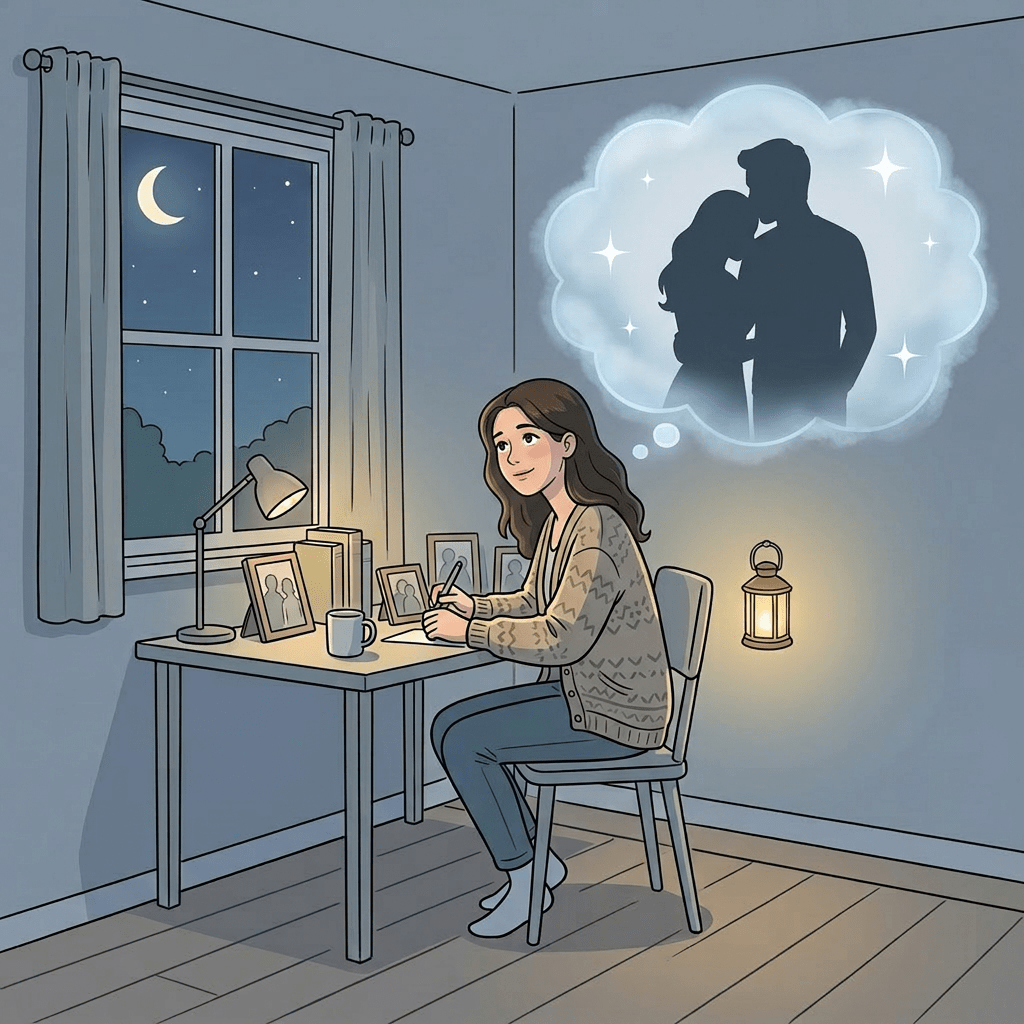
Over the past few years, popular culture has become increasingly fascinated with the idea of “the one who got away.” Across films, music, social media, and modern dating discourse, certain past relationships seem to occupy an almost mythical emotional status. Some people move on quickly after relationships end, while others remain psychologically present for years, continuing to shape future relationships, emotional expectations, and ideas about love itself.
In psychology, these lingering emotional figures are sometimes called phantom exes.
A phantom ex is not simply someone we miss. Rather, they are a past partner who remains emotionally or psychologically idealised long after the relationship has ended. Importantly, this is not always about love alone. Often, phantom exes emerge through a combination of nostalgia, unresolved attachment, emotional ambiguity, and the human tendency to romanticise what feels unfinished.
Why Some Relationships Become Emotionally “Sticky”
One reason phantom exes emerge is that humans rarely remember relationships objectively. Over time, memory becomes emotionally reconstructed. Conflict softens, emotional pain fades, and positive moments become more psychologically salient.
As a result, relationships can gradually become separated from their everyday reality. What remains is often not the full relationship itself, but a selective emotional memory shaped by longing, nostalgia, and imagined possibility.
Sometimes people are not mourning the relationship alone, but the future they believed the relationship represented. In many cases, the loss becomes tied to identity: who we were during that time, who we thought we might become, or the emotional version of ourselves attached to that relationship.
This may explain why certain people continue to linger in our minds despite relationships that are relatively short, inconsistent, or even unhealthy.
Attachment, Avoidance, and Emotional Distance
Attachment theory may also help explain why some relationships feel impossible to fully let go of.
In particular, avoidant attachment dynamics can sometimes contribute to the phenomenon of phantom exes. Individuals with avoidant attachment often struggle with emotional vulnerability and closeness during relationships, leading to emotional distancing or withdrawal when intimacy becomes overwhelming. Yet paradoxically, once distance is restored after a breakup, the relationship may begin to feel emotionally safer to revisit psychologically.
From a distance, relationships lose much of the vulnerability, conflict, and emotional complexity that existed in reality. What remains is often a cleaner, idealised emotional narrative.
This creates an interesting paradox: intimacy may feel threatening when emotionally present, but easier to romanticise once unavailable.
At the same time, anxiously attached individuals may also become especially vulnerable to phantom exes because uncertainty and lack of closure tend to intensify emotional fixation. Relationships characterised by ambiguity, inconsistency, or intermittent reinforcement often remain psychologically unresolved for much longer than stable and emotionally secure relationships.
Sometimes the relationships that stay with us longest are not necessarily the healthiest, but those that feel emotionally unfinished.
The Rise of the Digital Ghost
Modern technology may intensify this phenomenon even further.
Previous generations often lost access to former partners after relationships ended. Today, however, social media allows past relationships to remain psychologically accessible indefinitely. Stories, photographs, playlists, and online visibility create what might be described as digital ghosts: relationships that remain partially present despite being over.
This constant accessibility can make emotional closure more difficult, particularly for individuals already prone to nostalgia, rumination, or unresolved attachment. In many ways, modern dating environments may not simply make relationships easier to begin, but harder to psychologically end.
Why Phantom Exes Can Interfere With Current Relationships
One difficulty with phantom exes is that idealised memories are difficult for real people to compete with.
Current relationships involve:
- vulnerability
- compromise
- emotional uncertainty
- conflict resolution
- and the ordinary imperfections of intimacy
Phantom exes, by contrast, often exist primarily through imagined possibility. A former partner, preserved through nostalgia and emotional distance, becomes psychologically frozen in time, while current relationships must exist in reality.
As a result, some individuals may unconsciously compare current relationships to emotionally reconstructed versions of the past, leading to dissatisfaction, emotional distance, or a persistent feeling that something is “missing.”
Conclusion
Popular culture often frames “the one who got away” as evidence of lost soulmates or missed destiny. Yet psychologically, phantom exes may sometimes reflect something more complicated: the human tendency to idealise unresolved emotional experiences.
Perhaps the relationships that stay with us longest are not always the healthiest or most sustainable, but those that remain emotionally unfinished.
And maybe the deeper question is not why certain people continue to haunt us, but what unresolved parts of ourselves they still seem to represent.


Leave a Reply